Health guide

My dog is stiff in the morning:
pain that shouldn't be dismissed

Is your dog stiff in the morning, limping when cold or slow to get going after resting? These signs usually point to pain that needs to be identified and treated.

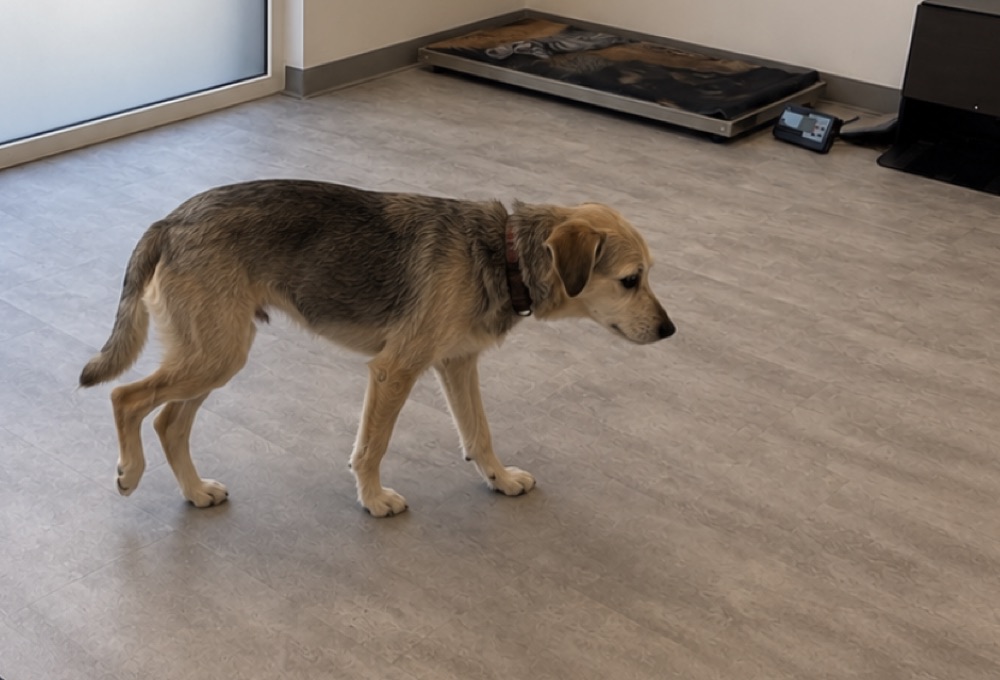
Dog that is stiff in the morning, seen at the Colvet clinic

Getting better after a few steps doesn't mean everything is fine

Does your dog struggle to get up after a night's sleep, walk slowly for a few minutes and then seem to move almost normally again?

This is often described as cold stiffness. It appears after a night, a long nap or a period of inactivity. The dog hesitates to get up, takes a few stiff steps, sometimes limps, and then seems to "loosen up" as it walks.

In the vast majority of cases, this change in gait reflects pain. The fact that the dog seems better after a few minutes doesn't mean the problem has gone away โ€” it simply means your dog is learning to live with pain.

Improvement with movement doesn't mean recovery

When an animal suffers from chronic pain, the first movements after rest can be particularly uncomfortable. As the dog walks, it adapts its gait and the stiffness becomes less noticeable.

Some dogs then continue their walk almost normally. Others show only mild, intermittent discomfort.

These temporary improvements sometimes lead owners to wait several months before seeing a vet. Meanwhile, the condition responsible for the pain can keep progressing, and the dog can gradually lose muscle mass.

A dog does not need to cry out or completely refuse to walk in order to be in pain.

Causes that can often be corrected

Some pain is caused by an injury that can be treated directly. Surgery may sometimes be necessary, but it isn't always the case. Common causes include:

Treatment may involve tailored rest, medication, a change in activity, weight loss, strengthening exercises or surgery. The choice depends on the underlying cause, the intensity of the pain and the impact of the injury on the joint.

Conditions that cannot always be cured

Some conditions cannot be completely eliminated. This is the case for certain advanced forms of osteoarthritis, degenerative diseases of the spine, or injuries too old to be corrected.

This doesn't mean there's nothing to be done. Even when the underlying cause can no longer be cured, the pain can and should be managed. Treatment may combine:

  • pain medication;
  • an adjustment of activity;
  • weight reduction if needed;
  • gradual muscle strengthening;
  • physiotherapy;
  • adjustments at home;
  • regular check-ups to fine-tune treatment.

The goal is then to preserve the dog's comfort, mobility and independence.

Surgery isn't always necessary

Morning stiffness doesn't automatically mean surgery is needed. Many types of pain can be managed medically when the joint remains stable and the injury doesn't require mechanical correction.

Conversely, when the pain comes from an unstable joint or an injury that keeps getting worse, medication may only mask the symptoms temporarily. Surgery can then offer a more lasting solution.

The orthopaedic examination exists precisely to make this distinction.

Examining a dog that is stiff in the morning

The examination starts by watching the dog walk, turn, sit and get up. It then assesses the joints, the back, muscle mass and paw placement to locate the pain. X-rays may be suggested when useful, but they aren't systematic.

A short video taken at home when the dog gets up can also be very useful, as the stiffness is sometimes less visible once the dog arrives at the clinic.

At Colvet in Cessange, Luxembourg City, we see dogs with morning stiffness, cold-limping or difficulty getting up for a locomotor and orthopaedic examination.

General information article. It does not replace a consultation: only a veterinary examination can establish a diagnosis and offer the treatment suited to your animal.

Have the stiffness or cold-limping examined

No referral from another vet is needed: book an appointment directly for an orthopaedic examination or a second opinion.