A cruciate ligament rupture is the most common cause of limping in dogs. It causes instability in the knee, and while medication can temporarily reduce pain and inflammation, it does not restore the joint's stability.
TPLO is a surgical procedure that changes the biomechanics of the knee, allowing the dog to regain stable weight-bearing despite the ruptured ligament.
What role does the cruciate ligament play in the knee?
The cranial cruciate ligament sits inside the knee (stifle). It helps keep the tibia in a stable position relative to the femur.
When it is partially or fully torn, the tibia tends to shift abnormally forward under the femur with every step. This repeated movement causes inflammation, pain and progressive wear of the joint. It can also damage the meniscus, a cartilage structure that acts as a shock absorber in the knee.
The limp can appear suddenly, but it can also set in gradually or fade temporarily on anti-inflammatories. These different patterns are covered in our article on the symptoms of cruciate ligament rupture.
The principle behind TPLO
TPLO stands for Tibial Plateau Levelling Osteotomy.
Contrary to what the name might suggest, the procedure does not involve replacing or repairing the torn ligament. It changes the angle of the top of the tibia to neutralise the abnormal movement that occurs during weight-bearing.
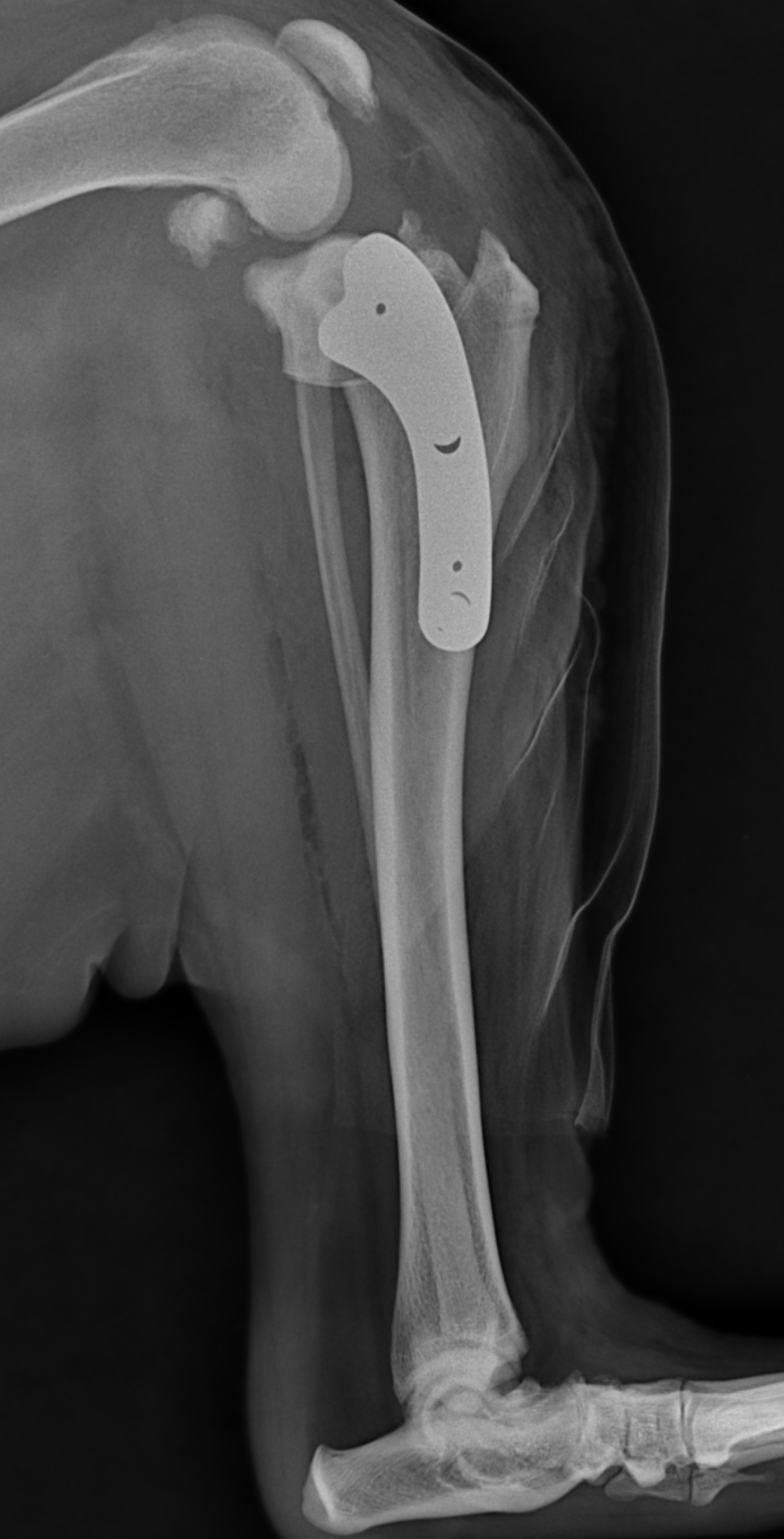
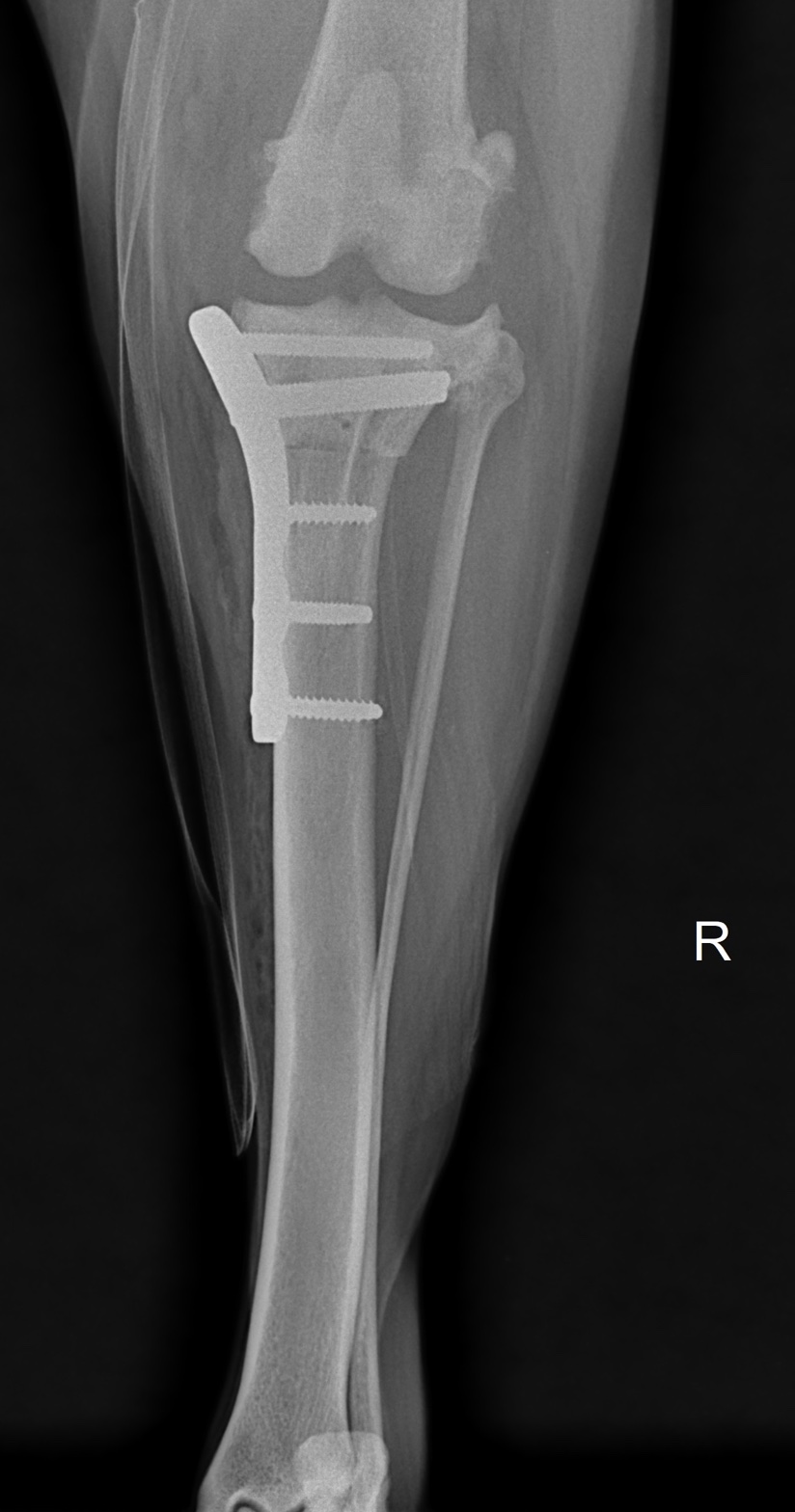
The surgeon makes a circular cut in the top of the tibia, then rotates the tibial plateau to a pre-calculated angle. The bone is then held in its new position with a plate and screws.
Once healed, the knee can function stably without relying on the damaged cruciate ligament.
Preparation tailored to each dog
Before surgery, a full orthopaedic exam confirms that the limp is coming from the knee and assesses joint instability.
Specific X-rays are then taken. They help check for signs of osteoarthritis, rule out other injuries, and precisely measure the tibial plateau angle. These measurements are used to plan the bone rotation and choose the implant size.
Pre-anaesthetic blood work may also be recommended depending on the dog's age, history and general health.
How the surgery is performed
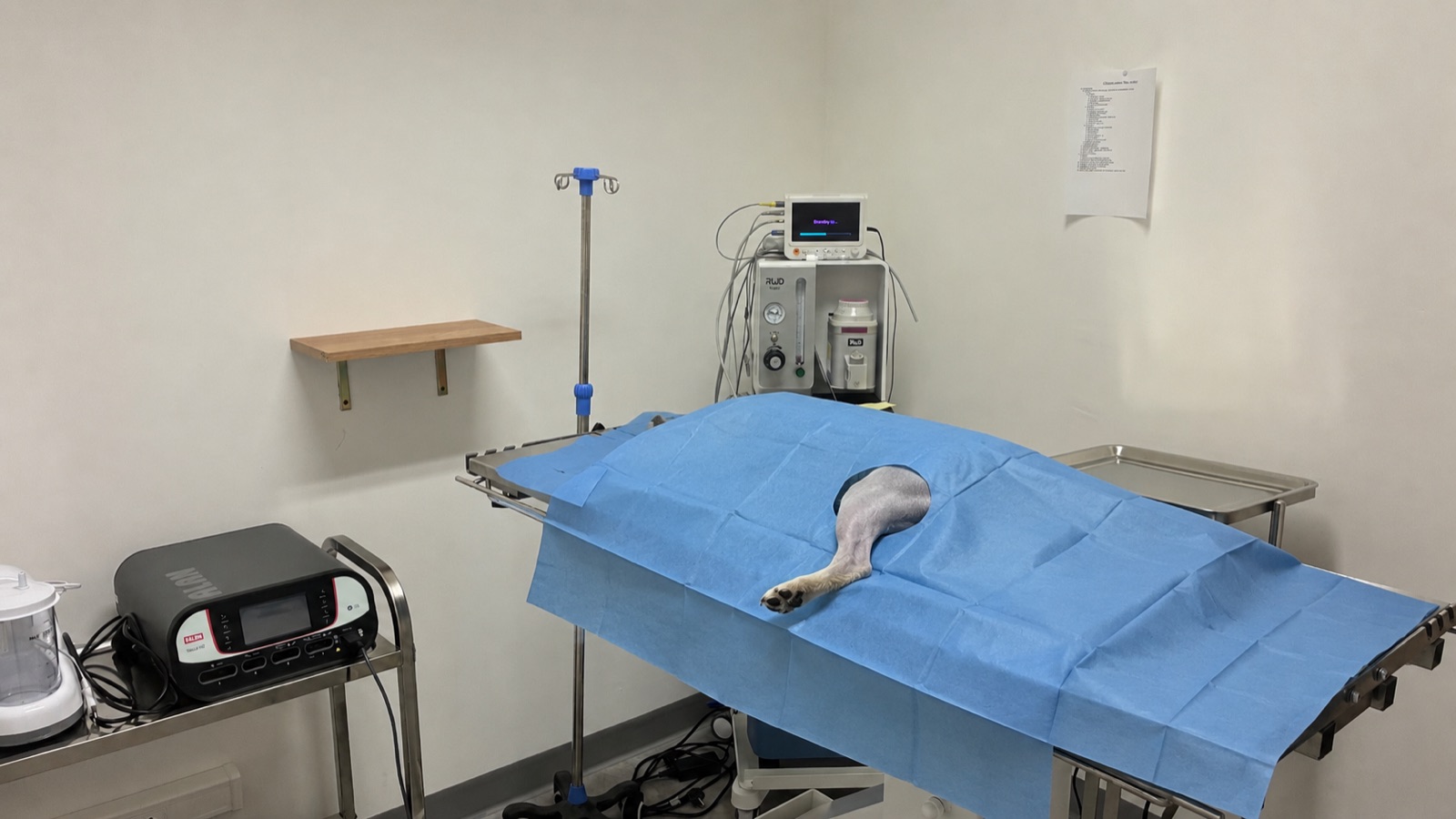
TPLO is carried out under general anaesthesia under strict surgical conditions.
The surgeon performs the tibial osteotomy, rotates the tibial plateau to the planned angle, then stabilises it with a plate and screws. Follow-up X-rays confirm the position of the bone and implants.
The plate does not act as a ligament replacement. It simply holds the bone in place while it heals. It can generally stay in place for the rest of the dog's life, unless a complication requires its removal.
The first few weeks after TPLO
Improved weight-bearing can appear quickly after surgery. This does not mean, however, that the bone has already healed.
For the first six weeks, rest must be strict. The dog is kept in a crate or a very confined space and only goes out for short, on-lead toilet walks. Stairs, jumping, play, slippery floors and free roaming must all be avoided.
Prescribed treatments help control pain and limit the risk of infection. The wound should be checked daily and protected from licking until it has healed.
A check-up is usually scheduled around two weeks after surgery to examine the incision.
The six-week X-ray check
Follow-up X-rays are taken around six weeks after TPLO. They check the progress of bone healing and implant stability.
Even when a dog is already walking almost normally, only X-rays can determine whether the bone is healed enough to start increasing activity.
Once healing is satisfactory, walks can be gradually lengthened. The return to activity should stay controlled and tailored to each dog. Running, rough play and jumping are only reintroduced once healing is sufficiently advanced.
Functional recovery
Most dogs start using the leg again fairly quickly, but full recovery takes anywhere from several weeks to several months.
The speed of recovery depends on how long the rupture had been present, the extent of osteoarthritis, the condition of the menisci, the dog's weight, and how closely post-operative instructions are followed.
Muscle loss is common before surgery. Gradually resuming walking helps rebuild this muscle. Physiotherapy can also be offered when useful.
Expected results after TPLO
The goal of TPLO is to restore comfortable, stable weight-bearing so the dog can return to a normal activity level.
The surgery does not make existing osteoarthritis in the knee disappear. It does, however, remove the instability that fuels inflammation and speeds up joint degeneration.
Weight control remains essential after surgery. Excess weight increases the strain on both knees and can slow recovery.
The other hind leg should also be monitored. Cruciate disease is often linked to a progressive weakening of the ligaments, and some dogs later develop a rupture in the other knee.
Possible complications
Like any surgical procedure, TPLO carries certain risks. Infection, delayed healing, implant irritation, fracture or a secondary meniscal injury can occur.
These complications remain uncommon, but sticking to post-operative rest is essential to limit the risk. Any sudden worsening of the limp, significant swelling, discharge from the wound or lethargy should prompt a quick call to the vet.
TPLO at Colvet
At Colvet, every dog receives an orthopaedic examination and a surgical plan tailored to its build and its injury.
Care includes assessing the knee, the X-rays needed for planning, the surgery itself, and follow-up until the healing check-up X-ray.
A dog with a persistent limp, one that starts limping again once anti-inflammatories are stopped, or one with an already diagnosed rupture, can be seen directly for an orthopaedic exam or a second opinion.